
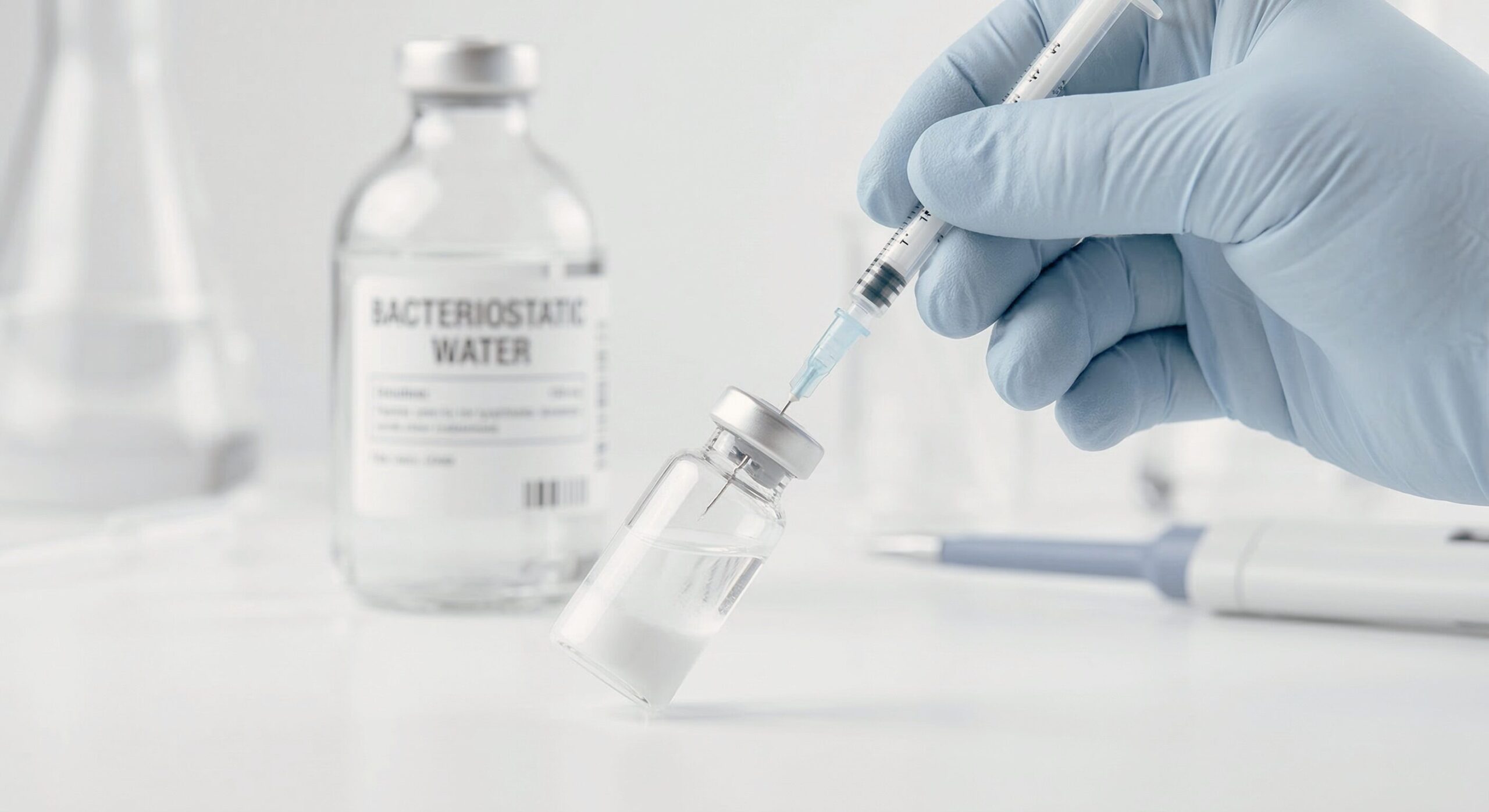
Reconstituting peptides is how to dissolve freeze-dried peptide powder into a solution you can measure and store. Whether you’re new to peptides or preparing your first vial, this step-by-step guide walks you through the entire process safely and correctly.
Reconstitution might sound technical, but it’s straightforward once you understand the basic steps. We’ll cover everything from gathering supplies to proper storage so you can confidently prepare your peptides at home.
What Does Reconstitute Mean for Peptides?
Reconstitution is the process of dissolving lyophilized (freeze-dried) peptide powder into a liquid solution. When peptides arrive from a research supplier, they’re in powder form because this format is more stable for shipping and long-term storage. To use them, you need to dissolve that powder in a sterile liquid—typically bacteriostatic water (BAC water).
The result is a liquid peptide solution that you can measure accurately in micrograms or milligrams, depending on your concentration.
Why Use Bacteriostatic Water for Reconstitution?
Bacteriostatic water is the standard solvent for peptide reconstitution because it contains benzyl alcohol, a preservative that keeps the solution sterile for about 28 days after reconstitution. This matters because once peptides are dissolved, they become vulnerable to bacterial growth if stored improperly.
Regular sterile water (without the preservative) won’t offer that protection. Bacteriostatic water allows you to store your reconstituted peptides in the refrigerator safely for weeks, using multiple doses from the same vial without contaminating the entire batch.
Supplies You’ll Need to Reconstitute Peptides
Before you start, gather these items:
Essential supplies:
– Bacteriostatic water (typically 1–2mL per vial; Modern Aminos offers bacteriostatic water
– Insulin syringe with needle (1mL size is standard; Amazon: 1mL insulin syringes)
– Alcohol prep wipes (70% isopropyl alcohol)
– The peptide vial (your lyophilized powder)
– A clean, flat workspace
Optional but helpful:
– Sterile gauze pads
– Biohazard sharps container (for needle disposal)
– Small vial storage box (refrigerator-safe)
All of these items are inexpensive and widely available. The most critical component is bacteriostatic water—don’t substitute with regular saline or distilled water.
Step-by-Step: How to Reconstitute Peptides
Step 1: Sanitize Your Workspace
Wash your hands thoroughly with soap and water. Wipe down your work surface with an alcohol prep wipe or disinfectant spray. This reduces the risk of introducing contaminants into your peptide solution.
Step 2: Prepare the Peptide Vial
Remove the peptide vial from its packaging. Locate the rubber septum (the rubber stopper on top). Using an alcohol prep wipe, gently wipe the rubber septum thoroughly. Let it air dry for 10–15 seconds. This removes any dust or microbes on the surface.
Step 3: Draw Bacteriostatic Water Into the Syringe
Open the bacteriostatic water bottle and wipe its rubber septum with an alcohol prep wipe. Allow it to dry.
Using your insulin syringe, draw the plunger back to the desired mL mark. For most 5–10mg peptide vials, you’ll use 1–2mL of bacteriostatic water. The amount depends on your target concentration (we’ll cover the math below).
Insert the needle into the bacteriostatic water vial at a slight angle and draw the liquid slowly into the syringe. Remove the needle and tap the syringe gently to dislodge any air bubbles.
Step 4: Inject the Bacteriostatic Water Into the Peptide Vial
This is the critical step. Insert the needle into the peptide vial’s rubber septum. Important: Aim the needle at the side wall of the vial, NOT directly at the lyophilized powder. Injecting directly onto the powder can cause foaming and may damage the peptide structure.
Inject the bacteriostatic water slowly and steadily down the inside wall of the vial. The powder will begin to dissolve as the liquid makes contact with it.
Step 5: Gently Mix (Never Shake)
Once all the bacteriostatic water is in the vial, remove the syringe and needle. Now, gently swirl the vial by rotating it slowly between your hands for 30–60 seconds. The peptide will dissolve gradually.
Do not shake the vial vigorously. Aggressive shaking can denature the peptide (damage its structure) and create excess foam. Slow, gentle swirling is the correct technique.
It may take 5–10 minutes for the powder to fully dissolve, especially with thicker peptides like TB-500. This is normal. You’ll know it’s fully reconstituted when the solution is clear or slightly cloudy with no visible powder particles.
Step 6: Verify and Store
Once fully dissolved, your reconstituted peptide solution is ready. The color may range from clear to slightly yellow depending on the peptide type. If you see particles or cloudiness that doesn’t clear within 15 minutes, the reconstitution may not be complete.
Refrigerate your reconstituted peptides immediately in a sealed container or vial. Label it with the peptide name, concentration, and reconstitution date. Most reconstituted peptides remain viable for 28–30 days when stored in the refrigerator.
Calculating Peptide Concentration
Understanding concentration is essential for accurate dosing. Here’s the basic formula:
Concentration (mcg/mL) = Total peptide amount (mg) × 1000 ÷ Total liquid volume (mL)
Example: You have a 5mg vial and reconstitute it with 1mL of bacteriostatic water.
- 5mg × 1000 = 5000 mcg
- 5000 mcg ÷ 1mL = 5000 mcg/mL (or 5 mcg per 0.001mL)
If you draw 0.01mL into your syringe, you’re administering 50 mcg of peptide.
For a 10mg vial reconstituted with 2mL:
- 10mg × 1000 = 10,000 mcg
- 10,000 mcg ÷ 2mL = 5000 mcg/mL
The concentration is the same, but you have twice the volume, making it easier to measure smaller doses accurately.
Common Reconstitution Mistakes to Avoid
Injecting directly onto the powder: This causes foaming and potential peptide damage. Always inject along the side wall.
Using regular sterile water: Without the benzyl alcohol preservative, your solution won’t stay sterile beyond a few days. Always use bacteriostatic water.
Shaking aggressively: This denatures peptides. Gentle swirling is the only motion you need.
Not labeling your vials: Once reconstituted, label everything clearly with the peptide type, concentration, and date. You won’t remember this information weeks later.
Storing at room temperature: Reconstituted peptides must stay refrigerated. Room temperature storage degrades them rapidly.
Reusing needles: Always use a fresh, sterile needle for each injection into a vial. Dull or contaminated needles introduce bacteria.
Peptide Reconstitution Storage Tips
After reconstitution, proper storage is critical for maintaining peptide stability:
- Temperature: Store in a standard refrigerator at 2–8°C (36–46°F). Never freeze reconstituted peptides unless the supplier specifically recommends it.
- Container: Keep peptides in the original vial or transfer to an amber glass vial to block light exposure.
- Duration: Most reconstituted peptides remain stable for 28–30 days. After this period, potency may decline.
- Labeling: Write the reconstitution date on the vial so you know when to discard it.
- Access: Minimize how often you open the vial. Each time you insert a needle, you introduce a small risk of contamination.
How Long Does Reconstituted Peptide Last?
The stability of reconstituted peptides depends on several factors:
- Bacteriostatic water preservative: Keeps the solution sterile for approximately 28 days.
- Temperature consistency: Refrigerator storage at steady temperatures extends shelf life. Frequent temperature fluctuations reduce stability.
- Peptide type: Some peptides, like TB-500, have longer half-lives and may remain effective slightly longer than faster-degrading peptides.
- Storage conditions: Amber vials and dark storage spaces protect peptides from light degradation.
Most research references recommend using reconstituted peptides within 28–30 days for optimal potency. Beyond this window, the peptide concentration may degrade, reducing effectiveness.
Safety Considerations When Reconstituting
When working with peptides and syringes, keep these safety practices in mind:
Needle safety: Always handle needles carefully to avoid accidental sticks. Use a sharps container for disposal, never throw needles in regular trash.
Sterility: Work in a clean environment and use alcohol prep wipes on all rubber septa before injection.
Hygiene: Wash your hands before and after handling peptides. Don’t touch the needle or the tip of the syringe after sterilization.
Consultation: While reconstitution itself is straightforward, discuss peptide protocols with a qualified healthcare provider before using them.
Source verification: Only purchase peptides from reputable research suppliers. Counterfeit or contaminated peptides pose serious health risks.
The Bottom Line
Reconstituting peptides is a simple process once you understand the steps: gather supplies, sanitize, inject bacteriostatic water slowly along the vial wall, swirl gently until dissolved, and store in the refrigerator. The entire process takes less than 10 minutes, and proper reconstitution is the foundation for safe, accurate peptide use.
By following this guide, you’ll ensure your peptides dissolve correctly, maintain their potency, and stay sterile throughout the storage window.
The information on The Perfect Peptide is for educational purposes only and does not constitute medical advice. Always consult a qualified healthcare professional before starting any new supplement or peptide protocol.
FAQ
How long does it take for peptides to fully dissolve after reconstitution?
Most peptides dissolve within 5–15 minutes of gentle swirling. Thicker peptides like TB-500 may take up to 30 minutes. Patience is key—never shake or apply heat to speed up the process.
Can I use regular sterile water instead of bacteriostatic water?
No. Bacteriostatic water contains benzyl alcohol, which keeps the solution sterile for 28 days. Regular sterile water will become contaminated within days once opened. Always use bacteriostatic water for safe, long-term storage.
What should I do if my peptide vial gets contaminated?
If you notice cloudiness, discoloration, or a foul smell, the vial is contaminated. Discard it immediately. Contaminated peptides may harbor bacteria or mold that pose health risks. This is why sterile technique during reconstitution is so important.
Can I reconstitute multiple peptides in the same vial?
No. Each peptide should be reconstituted in its own sterile vial. Mixing different peptides in one vial can cause chemical interactions and inaccurate dosing.
How do I store my reconstituted peptides during travel?
Use a small insulated cooler bag with ice packs to keep peptides at 2–8°C during transport. Limit exposure to room temperature to under 30 minutes. Once you reach your destination, refrigerate immediately.
What’s the shelf life of unopened lyophilized peptide powder?
Unopened, freeze-dried peptide powder can last 2–3 years or longer when stored in a cool, dark, dry place. Once you reconstitute it, however, the clock starts—use it within 28–30 days for optimal potency.

Chad Michaels holds a Bachelor's degree in Health & Human Performance and brings nearly three decades of experience in wellness optimization, recovery science, and longevity research. His work focuses on translating complex peptide studies into evidence-based, actionable guidance. Chad's insights have been featured in major national health publications.